Discussing the Synthesis and Sampling used by KMRU’s track “Windbags” and showing an overall analysis of his style and workflow.
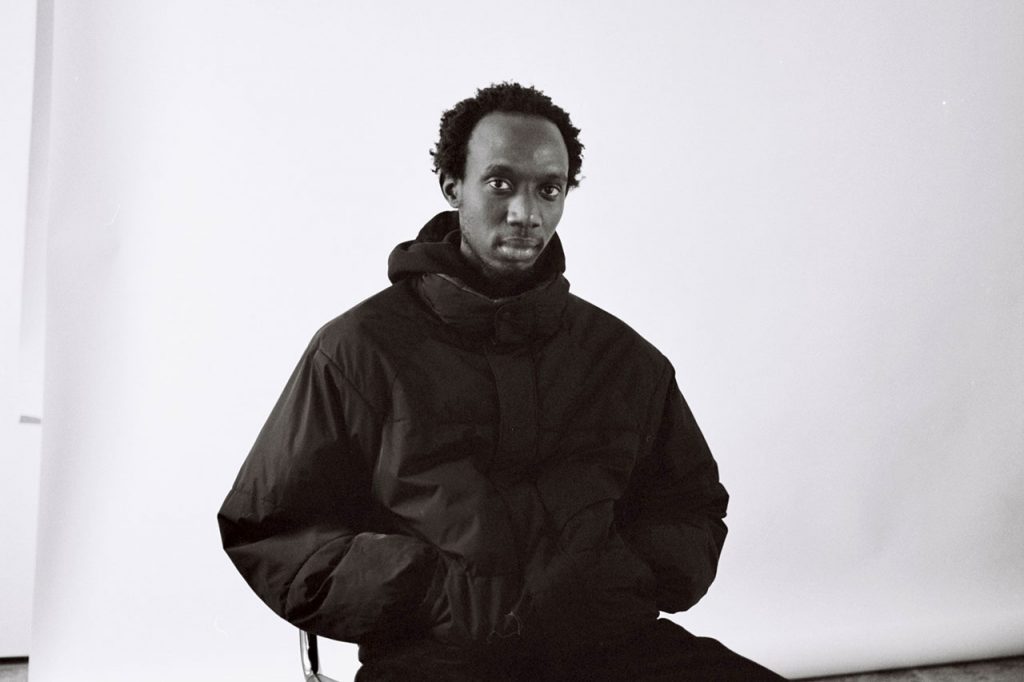
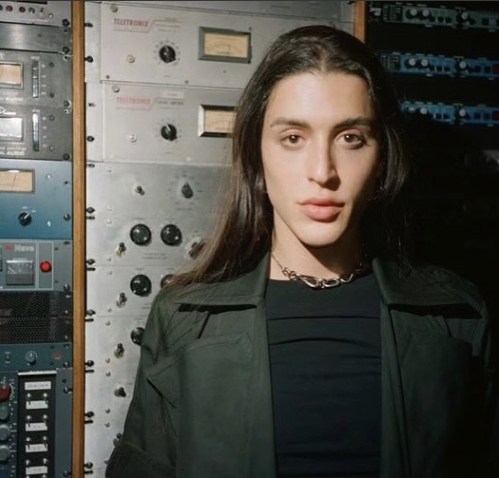
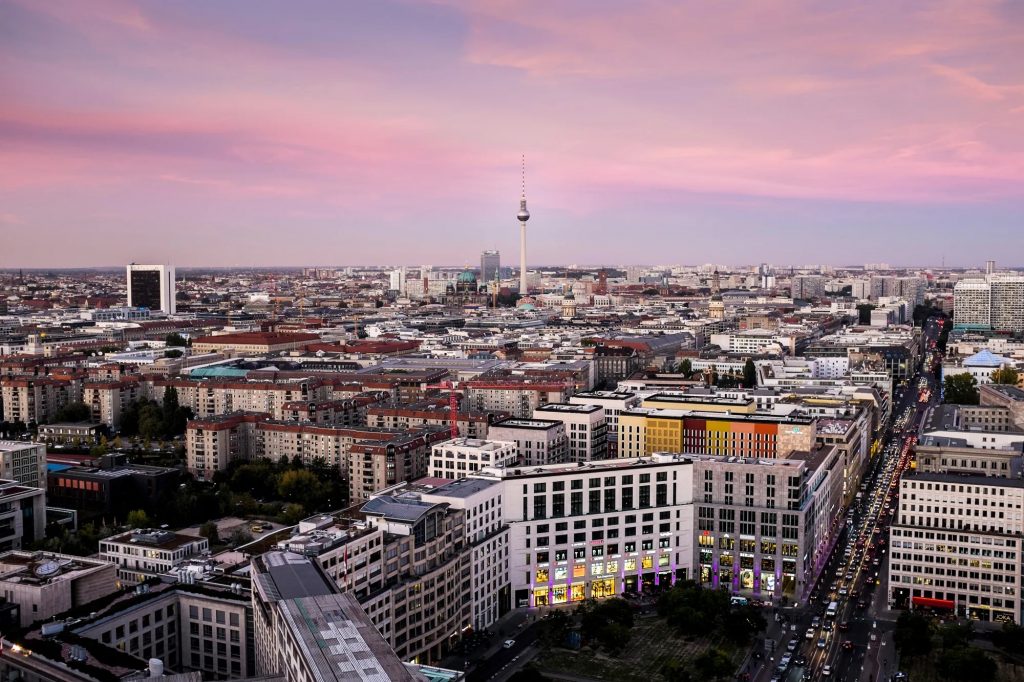
KMRU grew up in Nairobi’s Kariokor neighborhood in Kenya, where there were loud noisescapes and was always noisy with the sound of traffic and matatus. He moved from Kariokor to Rongai before moving again from Rongai to Berlin, in which he started to study a masters in “sound studies” which he mentions in the Adam Audio video. Whilst studying in Berlin he became obsessed with quiet soundscapes which contrasted the sounds he was used to in Kariokor, he also started to produce Ambient, drone and environmental music whilst blending this sound with the quiet soundscapes he was fascinated by, and recorded and processed field recordings to make his sound. KMRU released his track Windbags in 2023 and uses the idea of creating a soundscape with the noise around to give life to an ambient sound he is creating.


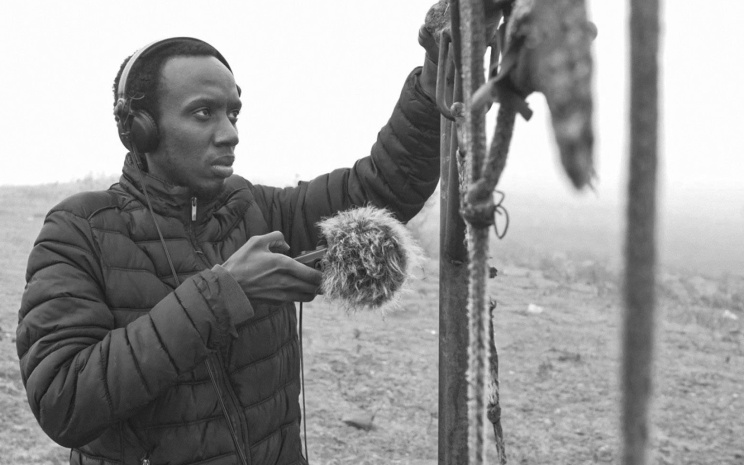
KMRU doesn’t approach sampling in a traditional western pop way by sampling a phrase and repeating it throughout a song, he samples recordings of his environment that he records with a microphone whilst walking around his environment. He chooses to sample things that aren’t seen as traditional like sampling broken instrument sounds or mainly focusing on detuned and percussive sounds. In the video “In the studio with KMRU” by Adam Audio via YouTube, he says he uses this approach as a “tool for compositions” and the purpose being to giving the listener to know “more about their surroundings”. He also has stated this approach is used in his music to “try to invite the audience to slow down” from “An Interview with KMRU” by Sydney van Nieuwaal and Thierno Deme via Subbacultcha, and this takes his music at it comes in contrast to the loudness and excitement of the Matatus he was used to back in Kenya.
KRMU states he picks his sample sounds on the mood and feel rather than the musical tonality. He then adds gain to his recordings that he chooses to sample to pick up discrete sounds and noises to help create ambience. When composing he normally likes to record drones and define these sounds as sampled pedal notes throughout his pieces, which he layers these sampled sounds with synths, clean instruments or long recordings. Sometimes using instruments to add to his sounds from the Ableton library to layer these ambience sounds which creates “a collection of vivid and dreamlike sound sculptures” as mentioned by Shape platforms analysis on KMRU .
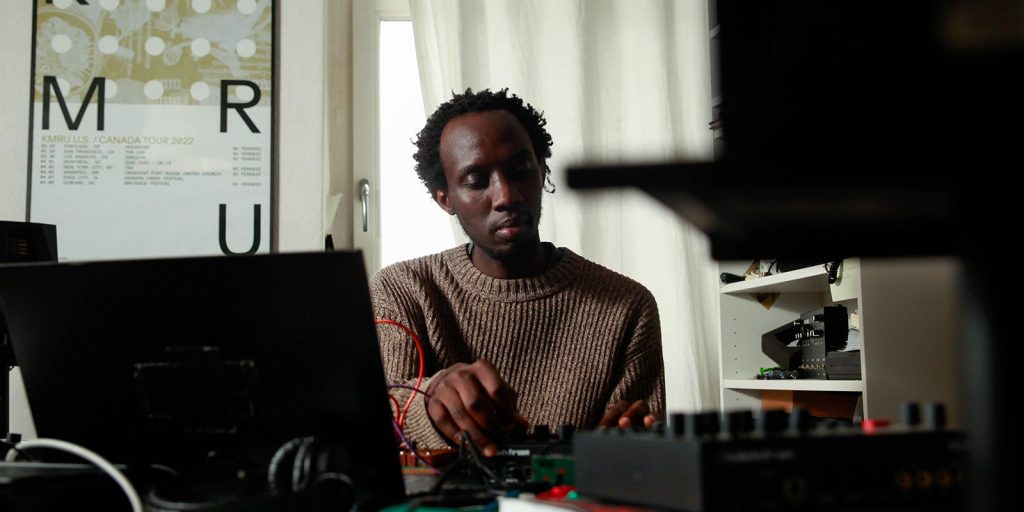
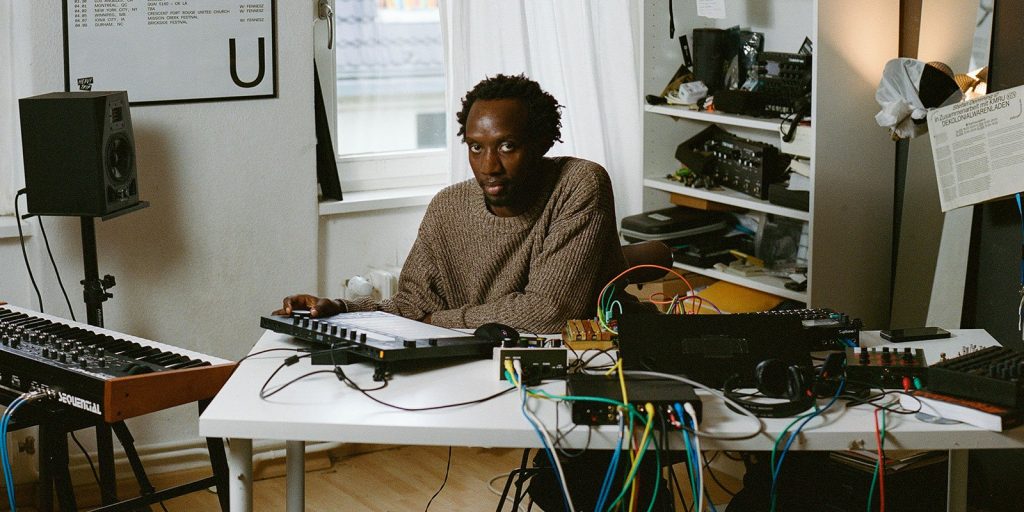
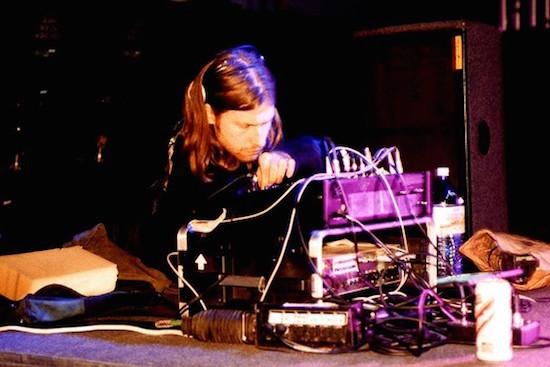
He uses microphones mainly a Zoom H6, in which he states “It all started when I got a Zoom recorder”, this is to record his sounds in which he says “It opened up this new world of field recording for me. Sometimes when I listen back to a field recording, it feels like a snapshot of a moment” and saying these sounds he records “ have a kind of natural harmony.”mentioned in Someone’s Always Listening: KMRU on the Art of Sharing Music via Ableton. He also uses sampled preset sounds using Kontakt 8. Alongside the preset sounds and library by Ableton Live for his instrument sounds. He plays these sounds over each other to create his sounds setting them to an Ableton push and recording them and using different microphones for electromagnetic sounds for their sonic quality.
https://www.ableton.com/en/blog/kmru-on-the-art-of-sharing-music
In the track “Windbags”, there is mainly sampling of ambience, with surround environment sounds around 1 minute in. Birds tweeting appear around 1 min 15 secs in the track, and this plays a few times possible cued in with a sampler and triggered with the Ableton push. Using the Zoom H6 to capture a low ambience sound around city of Berlin which feature in the track past the 1-minute mark. Eventually, wind sounds enter around 1 min 40 secs – 1 min 50 secs. At 2 mins 05 seconds, sounds like some kinds of buzzing sound possibly a bee. At 2 mins 50 seconds sounds like a car starting its engine sound. To finish light rain sounds end the track. All of these sounds help create a sense of a calm environment with KMRU himself creating this sense of atmosphere and having the listener travel through this environment and flow like the wind. KMRU himself states he likes just “embracing what happens” in the KMRU: Spaces video via Ableton, with all these sounds used to helps support the ambience and feeling of the space your in, whilst not being as controlled as typical sampling to help these sounds fit naturally in with the piece.
Attached below are some hyperlinks I used to conclude my information
- https://www.ableton.com/en/blog/kmru-on-the-art-of-sharing-music/
- https://shapeplatform.eu/artist/kmru/
- https://subbacultcha.nl/2023/02/01/an-interview-with-kmru/
- https://pitchfork.com/features/rising/meet-kmru-the-ambient-musician-with-his-ear-to-the-world/
- https://strumandiodine.com/article/heavy-calmness-an-interview-with-kmru/
- https://hero-magazine.com/article/230536/kmru-ax
- https://www.flowstate.fm/p/kmru-interview
- https://youtu.be/5yoQTLohl_Y
- https://youtu.be/jxRbgvRNoS4
- https://youtu.be/MmzjXTruJek
- https://youtu.be/xVtyXQ272GQ
- Someone’s Always Listening: KMRU on the Art of Sharing Music – Ableton
- KRMU – Shapeform
- An Interview with KMRU by Sydney van Nieuwaal and Thierno Deme – Subbacultcha
- Meet KMRU, the Ambient Musician With His Ear to the World – Pitchfork
- Heavy Calmness An Interview with KMRU – Strumandiodine
- Electronic musician KMRU collects sound recordings and transforms them into new worlds – Hero Magazine
- KMRU (Interview) – Flowstate
- IN THE STUDIO with KMRU – ADAM Audio via Youtube
- KMRU: Spaces – Ableton via Youtube
- One Thing: KMRU – Sampling broken instruments – Ableton via Youtube
- KMRU’s “Windbags” – KMRU via Youtube